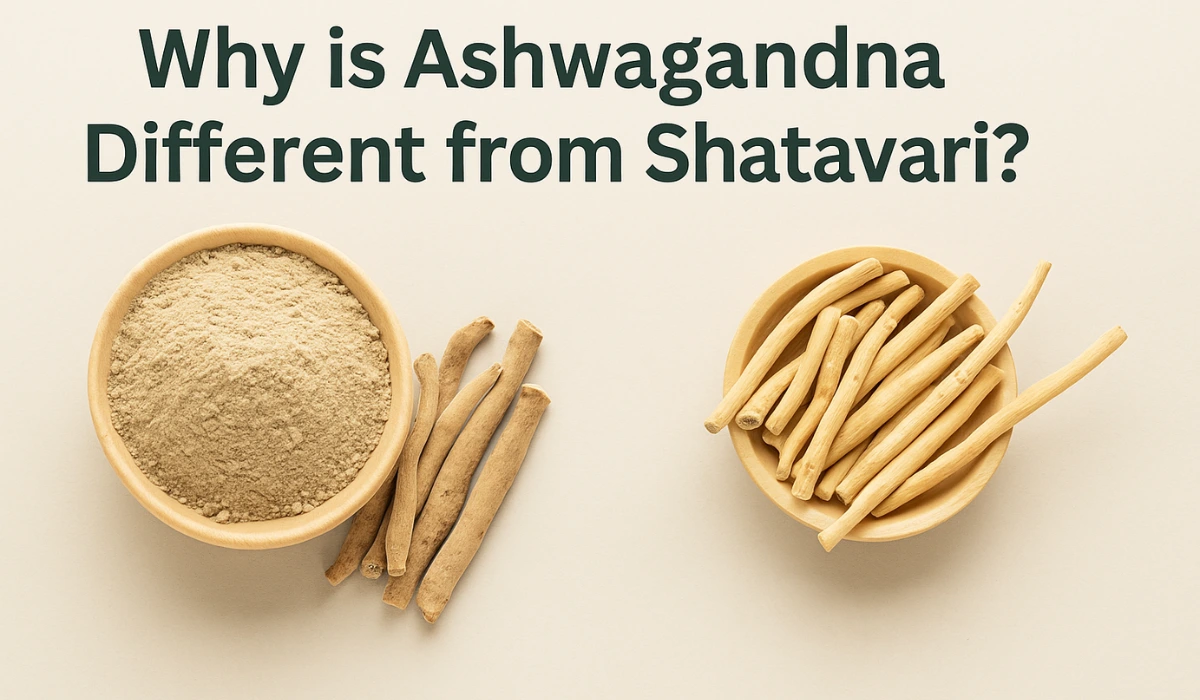
Though both Ashwagandha (Withania somnifera) and Shatavari (Asparagus racemosus) are revered adaptogenic herbs in Ayurveda, they differ significantly in composition, traditional use, physiological effects, and applications.
Ashwagandha vs Shatavari
Understanding these distinctions can help readers choose the right herb for their wellness objectives.
Botanical Origins & Basic Nature
- Ashwagandha is a small evergreen shrub in the nightshade family, native to India, the Middle East, and parts of Africa. Its name literally means “smell of the horse,” referencing its scent and strength-giving reputation.
- Shatavari belongs to the asparagus family and is a climbing plant with tuberous roots, historically used in Ayurveda for female vitality.
Nutritional & Chemical Profiles
- Shatavari is notably rich in crude protein (~7.8%) and fiber (~28.9%), whereas Ashwagandha has more carbohydrates (~47 g) and fewer proteins (~3.7 g).
- Ashwagandha contains bioactive compounds like withanolides, alkaloids, and sitoindosides—linked to its adaptogenic and neuroprotective benefits.
- Shatavari is rich in steroidal saponins, mucilage, and various alkaloids—providing its soothing and immune-boosting attributes.
Adaptogenic Mechanism & Hormonal Effects
- Ashwagandha primarily reduces cortisol to help the body manage stress. It’s recognized for its neuroprotective, anti-inflammatory, and antioxidant benefits.
- Shatavari, while also an adaptogen, supports hormonal health—particularly female reproductive health—and may elevate DHEA, a hormone that mitigates cortisol’s impact.
Health Benefits: Herb-by-Herb
Ashwagandha Benefits
- Stress & Anxiety Relief: Shown to lower cortisol, improve calmness, sleep quality, and mental clarity in multiple clinical studies.
- Sleep Support: Helps improve sleep latency, duration, and efficiency.
- Athletic Performance: Enhances strength, endurance, and oxygen utilization.
- Women’s Health: May improve hormone balance, skin health, and stress resilience.
- Male Hormones & Fertility: Studies show increases in testosterone, sperm quality, and libido.
Shatavari Benefits
- Female Reproductive Support: Widely used to ease PMS, menstrual cramps, menopausal symptoms, and support libido and uterine wellbeing.
- Digestive & Immune Health: Offers antioxidant, anti-inflammatory, diuretic, and immunomodulatory properties, and may aid with ulcers, diarrhea, cough, kidney stones, and blood sugar balance.
- Musculoskeletal Health: Preliminary research suggests potential benefits for muscle function and contraction.
Ayurvedic Characteristics: Warming vs. Cooling
- Ashwagandha is considered a warming herb, believed to promote vigor and counter fatigue.
- Shatavari is deemed cooling, soothing, and nourishing.
- Together, they are often combined to maintain energetic balance in the body—especially helpful in cases of frailty or hormonal imbalance.
Clinical Insights: When Used Together
A recent randomized controlled study showed both Ashwagandha and Shatavari, separately or together, reduced menopause symptoms, improved vascular health, and mitigated bone resorption in postmenopausal women.
Choosing the Right Herb
| Goal / Concern | Choose Ashwagandha | Choose Shatavari |
|---|---|---|
| Stress, sleep, mental clarity | ✅ Yes | |
| Athletic performance, stamina | ✅ Yes | |
| Male hormonal support (testosterone, fertility) | ✅ Yes | |
| Female reproductive health (PMS, menopause, fertility) | ✅ Yes | |
| Digestive, respiratory, and immune health | ✅ Yes | |
| Balanced energetic effect (warming + cooling) | ✅ Works well with Shatavari | ✅ Works well with Ashwagandha |
Safety & Usage Tips
- Ashwagandha: Generally safe up to 3 months; mild side effects may include digestive upset, sedation, or rare liver effects. Avoid during pregnancy or hormone-sensitive conditions.
- Shatavari: Long traditional use; clinical data on long-term safety is limited.
- Combined or Alone: Always start with low doses and consult a healthcare provider—especially for individuals with underlying health issues or on medications.
Conclusion
While both Ashwagandha and Shatavari are powerful Ayurvedic adaptogens, they serve different purposes:
- Ashwagandha: Best suited for stress relief, strength, sleep improvement, and hormonal support in both men and women.
- Shatavari: Ideal for women’s reproductive and digestive health, as well as overall immunity and inflammation control.
Combining them thoughtfully can offer a synergistic, holistic wellness approach, balancing both warming and nourishing energies.

Ashish Lavania is a chef and works for many 5 and 7-star hotels all over the world, like in Dubai, India, Spain, etc. He completed his education in IHM Delhi. He has 10 to 12 years of experience in the cooking industry. He cooks food with good nutritional value. He loves to spread his knowledge to the world via this website.